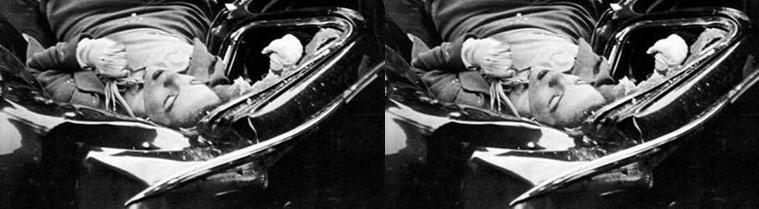

(Francis Bacon- Three Studies for Figures at the Base of a Crucifixion, 1944)
(Or: everyone's a critic: 'net journalism gets uglier.
Wherein things get heinously meta-, and a site reviewing reviews (kinda) gets reviewed.)
Writing about music is difficult. Zappa wasn't far off with the "dancing about architecture" similie- and yet, people persistently try. Just look at this blog, fer heaven's sake- trying to articulate why I like certain things without coming across as a tool (at least I hope I don't, but I'll leave judging there to you) isn't easy anyway, and it's much harder when it comes to music. There's something ineffable about albums I really love, and often it defies any analysis other than 'this makes me feel good inside'. This ineffability thing makes music journalism as a whole quite tricky: you're trying to convey something that's in a deep sense personal; quite literally subjective, and also doing so in a way that's interesting or persuasive, or at best both.
Which makes a website called ripfork, the1 scourge of the independent music2 critical machine, kind of interesting. It's safe to ripfork is rather unimpressed with the current state of music criticism- and its targets are the frequently overblown3 record/gig reviews from 'sites like pitchfork, drownedinsound et al. The reviews of reviews are close to medical diagnosis4: various language ailments are 'revealed' through close analysis of the review. And it's tricky not to write this piece in a way that's self-justifying or weasely or trying to remove myself from the 'bad journalism' camp (because I'm pretty sure I've been guilty of some of the things Wendus indicts others for), but I'll give it a shot- because there's some intriguing fall-out stuff about music, criticism and the English language that I think results. So: hear me out.
The root of Wendus' occasionally quite vitriolic attacks is quite a simple one, really: people hiding that they don't have much to say behind otiose verbiage.5 It's a pretty old problem; Orwell took "vague language" to task in the wonderfully concise Politics and the English Language of 1946. After all, words offer the means to meaning, to communication- and vague language communicates a lot, although admittedly probably not exactly what the author originally intended. In part, vagueness seems like a kind of bluffing mechanism: hiding the fact that you haven't got much to say. Sort of like the emperor's new clothes gone apeshit, with a thesaurus in hand.
This is all well and good and kinda admirable. But Wendus seems to want to go further: his mission, as far as I can tell, is to stop music journalism in its entirety. Don't think I'm exaggerating here: frequently calling journalists "music lice" and exhorting them to create music of their own just seems boneheaded. It's something that isn't helped by the frequent (and kind of unnecessary) personal attacks. There's two separate things running alongside here, but together they undermine what could've been a brilliant website and a really important point.
First, the personal attacks: I'm gonna take it for granted that a lot of independent music websites and their journalists frequently go for the musician and not the music. This is regrettably part and parcel of the scene. But in insulting those that insult, the moral high ground isn't just lost, it's totally forgotten about. Argument ad hominem pretty slams the brakes on any kind of productive dialogue, and it just feels like an attempt to score easy points. Anyone can be rude on the internet. It's... cheap.
And the "why don't you stop criticising and create" thing, a favourite of the critically maligned artist since time immemorial is just stupid. However dire a state it may be in now, criticism still does act to filter out the crap and reveal otherwise hidden gems. Of course it isn't perfect, but it's useful. Denying that is just blinkered and retrogressive.
I'm not going to go as far as Wilde did in The Critic As Artist and say that criticism is more valuable than art itself, but I certainly think that it- when done well- can be incredibly interesting. And Ripfork highlights the problem with a lot of the criticism about: it's boring and obfuscating and a chore to read. It's not really any wonder I frequently skip the reviews and scroll down for the star/needlessly precise points rating6; that's become the important bit, not the opinions of an informed and amusing music fan- which, if you think about it, probably should be the thing that matters.
What I think we need are more people unafraid to use the personal pronoun I, more reviewers that talk in plain English and avoid excessive genrefication7. More people like DiS's bloody marvellous Wendy Roby, or the wonderful Simon Price. Criticism can be great, despite what Mr Wendus says.
1 (or at least, a)
2 The temptation to put this in scare quotes was huge, but I valiantly resisted. Very broadly, I mean: the people interested in independent music, either in terms of record-label ownership or "spirit", and focused primarily on bands often not particularly commercially successful. This is a rough definition, but I'm sure you can guess the people and musicians I mean. A clue: it's not bands like The Killers. There's some serious worm/can/opening that has the potential to go on here- especially about why the indie community is the way it is. But, if this ain't mixing metaphors too much, I'll try to keep a lid on that stuff.
3 To say the very least.
4 If the person doing the diagnostic work was really, really angry at the patient.
5 I like the word otiose, okay?
6 And I think there's a pretty good case for just doing away with star ratings altogether. If nothing else, it'd force people to read the reviews.
7 The genrefying thing is a complete minefield, and I don't particularly want to venture into it right now- both sides have a point, but when your description runs to three or more hyphenated words, you should probably just stop...
Which makes a website called ripfork, the1 scourge of the independent music2 critical machine, kind of interesting. It's safe to ripfork is rather unimpressed with the current state of music criticism- and its targets are the frequently overblown3 record/gig reviews from 'sites like pitchfork, drownedinsound et al. The reviews of reviews are close to medical diagnosis4: various language ailments are 'revealed' through close analysis of the review. And it's tricky not to write this piece in a way that's self-justifying or weasely or trying to remove myself from the 'bad journalism' camp (because I'm pretty sure I've been guilty of some of the things Wendus indicts others for), but I'll give it a shot- because there's some intriguing fall-out stuff about music, criticism and the English language that I think results. So: hear me out.
The root of Wendus' occasionally quite vitriolic attacks is quite a simple one, really: people hiding that they don't have much to say behind otiose verbiage.5 It's a pretty old problem; Orwell took "vague language" to task in the wonderfully concise Politics and the English Language of 1946. After all, words offer the means to meaning, to communication- and vague language communicates a lot, although admittedly probably not exactly what the author originally intended. In part, vagueness seems like a kind of bluffing mechanism: hiding the fact that you haven't got much to say. Sort of like the emperor's new clothes gone apeshit, with a thesaurus in hand.
This is all well and good and kinda admirable. But Wendus seems to want to go further: his mission, as far as I can tell, is to stop music journalism in its entirety. Don't think I'm exaggerating here: frequently calling journalists "music lice" and exhorting them to create music of their own just seems boneheaded. It's something that isn't helped by the frequent (and kind of unnecessary) personal attacks. There's two separate things running alongside here, but together they undermine what could've been a brilliant website and a really important point.
First, the personal attacks: I'm gonna take it for granted that a lot of independent music websites and their journalists frequently go for the musician and not the music. This is regrettably part and parcel of the scene. But in insulting those that insult, the moral high ground isn't just lost, it's totally forgotten about. Argument ad hominem pretty slams the brakes on any kind of productive dialogue, and it just feels like an attempt to score easy points. Anyone can be rude on the internet. It's... cheap.
And the "why don't you stop criticising and create" thing, a favourite of the critically maligned artist since time immemorial is just stupid. However dire a state it may be in now, criticism still does act to filter out the crap and reveal otherwise hidden gems. Of course it isn't perfect, but it's useful. Denying that is just blinkered and retrogressive.
I'm not going to go as far as Wilde did in The Critic As Artist and say that criticism is more valuable than art itself, but I certainly think that it- when done well- can be incredibly interesting. And Ripfork highlights the problem with a lot of the criticism about: it's boring and obfuscating and a chore to read. It's not really any wonder I frequently skip the reviews and scroll down for the star/needlessly precise points rating6; that's become the important bit, not the opinions of an informed and amusing music fan- which, if you think about it, probably should be the thing that matters.
What I think we need are more people unafraid to use the personal pronoun I, more reviewers that talk in plain English and avoid excessive genrefication7. More people like DiS's bloody marvellous Wendy Roby, or the wonderful Simon Price. Criticism can be great, despite what Mr Wendus says.
1 (or at least, a)
2 The temptation to put this in scare quotes was huge, but I valiantly resisted. Very broadly, I mean: the people interested in independent music, either in terms of record-label ownership or "spirit", and focused primarily on bands often not particularly commercially successful. This is a rough definition, but I'm sure you can guess the people and musicians I mean. A clue: it's not bands like The Killers. There's some serious worm/can/opening that has the potential to go on here- especially about why the indie community is the way it is. But, if this ain't mixing metaphors too much, I'll try to keep a lid on that stuff.
3 To say the very least.
4 If the person doing the diagnostic work was really, really angry at the patient.
5 I like the word otiose, okay?
6 And I think there's a pretty good case for just doing away with star ratings altogether. If nothing else, it'd force people to read the reviews.
7 The genrefying thing is a complete minefield, and I don't particularly want to venture into it right now- both sides have a point, but when your description runs to three or more hyphenated words, you should probably just stop...

No comments:
Post a Comment