
Some swift reading meant three further volumes have been demolished since the last post. (Well, four, but one was sixty-odd pages and had pictures, so doesn't really count...) Of these, one I don't particularly want to discuss- Graham Greene's Brighton Rock- because, although a very good novel, I haven't really got much to say about it. A murder-mystery with pretty obvious (and occasionally overpowering) discussions of Catholic mor-al-i-tee. Engrossing, but somewhat insubstantial. Insert the appropriate food similie here.
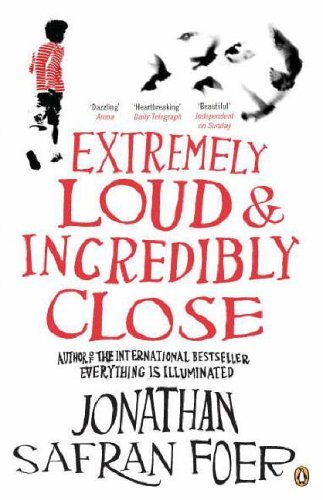
Anyway. The other two (Douglas Coupland's Generation X (1991) and Extremely Loud and Incredibly Close (2005) by Jonathan Safran Foer) were more interesting- especially the way in which the two are kind of linked, and how that link goes some way to explaining the way I feel about each book. Let me explain, because at least prima facie there doesn't seem to be much connection there- Gen. X is about three jaded twenty somethings telling each other stories in the desert, and Extremely Loud... details (at least in part) a boy named Oskar's search for a lock. But trust me.
Generation X, as far as I can see, sets out the problem: the corrosive, debilitating effects of marketing and advertising upon the young ('I am not a target market'); the weird kind of anomie amongst a specific substrata of middle-class ex-students, characterised by 'terminal wanderlust'; and the general difficulty of being alive and aware in an information overloaded post-postmodern age. Coupland certainly isn't alone in attempting to tackle or even outline this problem (see below for others) but he does have a lightness of touch that makes Gen. X a compelling read. It's his partial solution to the aforementioned problem- specifically, the crushing lack of sincerity inherent in modern teenage/twentysomething living that's the most interesting, though: the three have a rule that none can criticise or interrupt the others' tale, (apparently) in a similar manner to those of Alcoholics Anonymous meetings*. This, neatly, circumvents the listeners' (and possibly our?) ability to sarcastically respond. It is, in essence, fiction dealing squarely with the issues of fiction: the fallout from modernism and postmodernism, and thence the world.
How it links to Extremely Close... is the interesting part: Foer, rather than attempting to address the sameissue head on (as Coupland, DFW, Barthelme** et al have) or even really at all, instead uses all the tropes and techniques of so-called recherché postmodernism to create a story that is intensely moving. It seems that the way out of the maze is not to ignore these oft-derided devices- but instead to utilise them to one's own ends: similarly to Foer's first work (2002's equally brilliant Everything Is Illuminated) the novel has (at least) three different narrators intertwining, employs pictures, 'found' passages, rapid changes of register etc. etc. And rather than being the impressive but ultimately empty exercise some have derided the genre as becoming (see here for probably the best exposition of the opposition's argument) it's... well, it's heartbreaking. This novel has a soul.
And somewhere therein lies the difference between the two novels: whilst Gen. X is good, (even great) I can't help but feel a sense of emptiness reading it. Extremely Loud, on the other hand, through avoiding the often navel-gazing aspect that can become apparent when fiction discusses itself, is beautiful. They both come thoroughly recommended, but (obviously) it's Jonathan Safran Foer's novel that gets my nod.
*Interestingly, visiting AA meetings and halfway houses was a big inspiration for David Foster Wallace's Infinite Jest, and DFW's solution to the above problems is largely the same: unflinching honesty; "sharing"- albeit hidden underneath reams of information and a wonderfully sharp sense of the absurd. And I think DFW does what Coupland did a great deal better- but that's a whole 'nother can of worms we'd best keep closed for now, but expect an Infinite Jest post at some point in the future...
**If you can find it online, Barthelme's short story The Balloon is a brilliant skewering of (some elements of) contemporary lit-crit.
______
MUSIC.
If I believed in God (I don't) and the Biblical creation story (ditto) then I'd be pretty convinced Steve Reich's Music For 18 Musicians would've been playing at the moment of creation. It's beyond beautiful. The whole piece (and the equally, if not more brilliant, Different Trains) is on spotify, but here's a sample...
This week's other listening has been Patrick Wolf's fantastic Wind In The Wires. Go forth! Get it!

No comments:
Post a Comment